

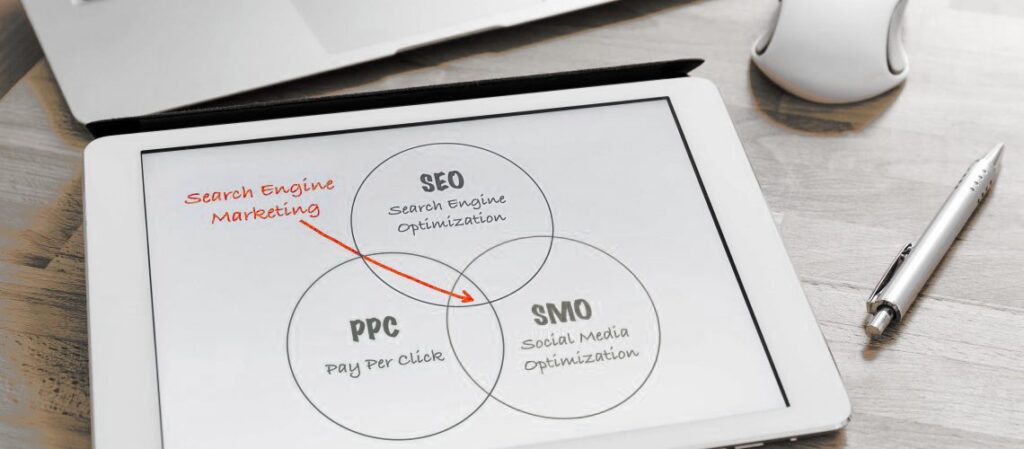
In the world of Digital Marketing, two behemoths rule the landscape. Search Engine Optimization, or SEO, reigns supreme as a producer of organic, search results-based traffic to your website, while Pay-Per-Click, or PPC, provides immense advertising power by granting you direct, pay-as-you-go access to your target market.
You may have heard that you need to optimize your website for SEO only to then understand that you need to be running a targeted PPC campaign as well. The idea is to grow your online presence both organically (through SEO), and through paid advertising (via PPC). We are often asked by our clients which of the two nets the most profit for dollar spent, and the answer is simply that it depends.
To understand why we’re demystifying SEO and PPC. In this article, you’ll learn the differences between both, and why they matter for your business.
SEO vs. PPC: The Grudge Match Continues
SEO vs. PPC: SEO
In a nutshell, SEO means making the content on your site as relevant as possible to people who are searching for businesses like yours. There are many ways to do this, and they each have their own set of best practices depending on how your site is structured and the kind of product or service you are providing. SEO optimization often includes at least the following:- Keyword Inclusion: To be found online, your site needs to have the right keywords placed at strategic locations throughout your website.
- Link Building: Earning links to your site from other locations on the internet improves your popularity score with Google and other search engines.
- Load Speed Auditing: If your site doesn’t load well or doesn’t have a mobile-optimized version, your SEO rankings will likely suffer.
- Site Design and Usability Enhancement: Google gives preference to websites that have higher user engagement. This makes it very important to keep your visitors on your site for longer. Good site design and sticky content achieve this.
